



Launching an online store in 2026 is no longer just about “building a website.” Businesses need a fast, stable, and user-friendly eCommerce platform that works smoothly with payments, shipping, CRM systems, marketing tools, and SEO.
So the real cost of a WooCommerce store today is a lot more than just “the price of a website.”
In this article, we’ll break down the real cost of a WooCommerce online store in Ukraine in 2026, what affects the budget, where businesses usually overspend, and how to understand which solution is right for your company.

Why WooCommerce Is Still Popular in 2026
WooCommerce remains one of the most popular eCommerce platforms in the world. In Ukraine, small and medium-sized businesses especially choose it because it allows them to launch online sales relatively quickly without building a complex system from scratch.
The biggest advantage of WooCommerce is flexibility. You can start with a simple store and later scale the project step by step by adding integrations, automation, custom modules, SEO features, and even B2B functionality.
However, there’s an important detail: WordPress itself is free, but a real commercial online store consists of dozens of additional components. Those components are what actually shape the final budget.
What Determines the Cost of a WooCommerce Store
The price of an online store in 2026 depends on much more than just design.
The main factors that affect the budget include:
- number of products;
- catalog complexity;
- design type;
- required integrations;
- SEO setup;
- speed optimization;
- custom functionality;
- traffic load;
- post-launch support.
For example, a store with 100 products using a standard template can cost 5–7 times less than a project with ERP integration, multilingual support, advanced pricing logic, and a custom dealer dashboard.
How Much Does a Basic WooCommerce Store Cost?
The simplest option is a template-based store for small businesses or startups.
This format usually includes a ready-made theme, standard WooCommerce functionality, and a minimal set of plugins.
A basic launch often includes:
- WordPress and WooCommerce installation;
- template setup;
- basic design customization;
- product catalog;
- cart and checkout;
- payment integration;
- shipping setup;
- mobile responsiveness;
- basic SEO optimization.
In Ukraine, a basic WooCommerce store in 2026 usually costs between $800 and $2,500 depending on the studio and project complexity.

Mid-Level Stores: The Most Popular Business Option
Most companies in 2026 no longer want “just a website.” Businesses expect their online store to be:
- fast;
- SEO-friendly;
- stable;
- marketing-ready;
- scalable.
That’s why the mid-range segment today is no longer just a generic template store. It’s usually a partially customized WooCommerce solution.
These projects often include:
- custom UI/UX design;
- custom product pages;
- SEO filters;
- CRM integration;
- product import automation;
- multilingual setup;
- speed optimization;
- caching systems;
- security improvements;
- analytics and advertising event tracking.
The average cost of these WooCommerce stores in Ukraine in 2026 is typically between $3,000 and $8,000.
For most businesses, this is where cost and functionality line up best.
When WooCommerce Becomes Expensive
Many business owners assume WordPress is always cheap. But in large eCommerce projects, the situation changes dramatically.
WooCommerce can become significantly more expensive if the project includes:
- tens of thousands of products;
- advanced filtering;
- high traffic loads;
- non-standard business logic;
- B2B dashboards;
- personalized pricing;
- ERP integrations;
- automated inventory synchronization;
- custom business workflows.
At this point, development starts to resemble a fully custom-built platform. Budgets can easily start from $10,000–15,000 and continue growing.
That’s one of the reasons why some businesses eventually migrate from WooCommerce to Laravel or other custom solutions.
Where Businesses Usually Overspend
One of the biggest problems with WordPress stores is uncontrolled project growth.
At first, everything seems inexpensive:
“Let’s just install another plugin.”
A year later, the business ends up with:
- 40+ plugins;
- update conflicts;
- slow performance;
- duplicate pages;
- checkout issues;
- SEO problems;
- unstable admin panel behavior.
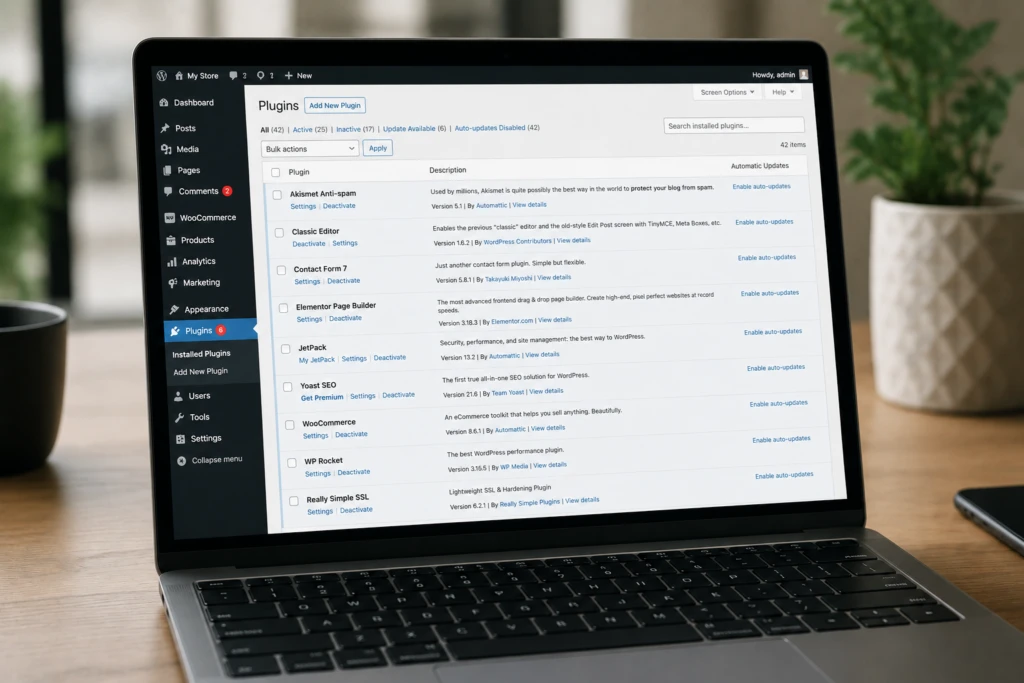
Technical debt often becomes the largest hidden expense.
That’s why a good WooCommerce store in 2026 is not about “adding more plugins.” It’s about proper architecture and controlled scaling.
Ongoing Costs After Launch
Many businesses calculate only the development budget and forget about ongoing expenses.
After launch, WooCommerce stores usually require:
- hosting;
- domain renewal;
- premium plugins;
- backups;
- technical support;
- updates;
- SEO services;
- advertising;
- feature improvements.
On average, WooCommerce maintenance in Ukraine in 2026 ranges from $100 to $1,000+ per month depending on business size and complexity.
What’s Better in 2026: WooCommerce or Custom Development?
For small and medium-sized businesses, WooCommerce is still one of the best options in terms of price-to-functionality ratio.
However, if a business grows rapidly, has complex workflows, or handles large-scale operations, sooner or later custom development becomes a serious consideration.
The most important thing is not choosing a platform “for life.” What matters more is selecting the right solution for your current business stage and avoiding unnecessary complexity at the beginning.
Final Thoughts
There’s no way to price a store in advance without answering one question: what will it look like a year or two from now, not just at launch. A catalog that grows from a hundred products to a few thousand needs a different architecture — and retrofitting that later always costs more than planning for it upfront.
So budget for ongoing support over the next two or three years, not just the build.
That’s the number that will actually hold up — not just a line in a proposal.