



Many entrepreneurs start their eCommerce journey with ready-made solutions. This is completely understandable: modern CMS platforms make it possible to launch an online store quickly, test a niche, and start receiving orders without significant investment in development. OpenCart, WooCommerce, and other popular platforms are excellent choices for businesses that are just entering the market and building their customer base.
However, every successful online store eventually faces new challenges. The product catalog grows, new sales channels appear, the team expands, and automation becomes a necessity. At this stage, many business owners begin to realize that the platform that worked perfectly a year ago is now limiting the company’s growth.
A custom online store is not simply a more expensive version of a standard CMS. It is a solution built specifically around your business processes, sales logic, and long-term goals. But how can you tell when your business has outgrown a template-based platform? Let’s look at the most common situations.

Business Processes Have Become More Complex Than Your CMS Can Handle
At the beginning, everything is usually straightforward. A customer adds products to the cart, places an order, and a manager processes and ships it. As the company grows, however, new workflows emerge.
Some customers start buying wholesale, others require custom pricing agreements. Different customer groups may need unique discounts, personalized pricing, or manual approval processes. Multiple warehouses, inventory reservations, loyalty programs, and advanced shipping rules become part of daily operations.
Most CMS platforms solve these challenges through third-party plugins and extensions. Initially, this seems convenient, but over time the store becomes a collection of interconnected modules. Every update introduces risks, and each new feature becomes increasingly expensive to implement.
If your business processes no longer fit into the standard logic of your CMS, it may be time to consider a custom-built solution.
Integrations Create More Problems Than They Solve
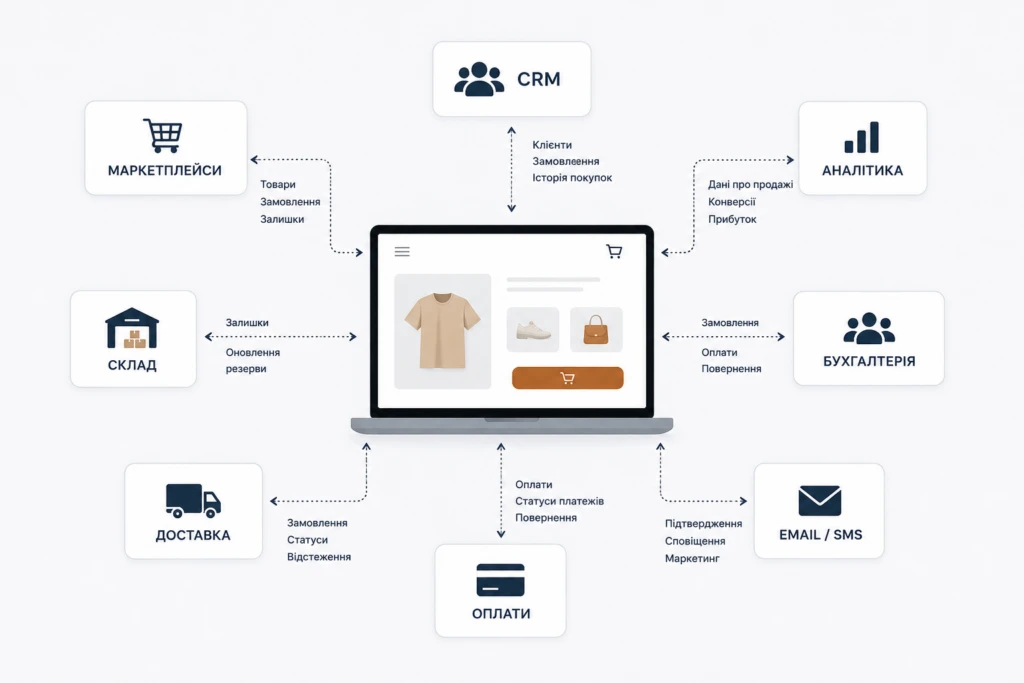
Modern eCommerce businesses rarely operate as standalone systems. Online stores are connected to CRM platforms, accounting software, warehouse management systems, shipping providers, payment gateways, marketplaces, and analytics tools.
For smaller businesses, standard integrations are often sufficient. As operations become more sophisticated, however, custom requirements begin to appear. You may need to synchronize inventory across multiple warehouses, automate status changes based on customer actions, or transfer additional data to your CRM.
In these cases, ready-made integrations often provide only partial functionality and require extensive customization. Business owners become dependent on third-party solutions that may not always be actively maintained.
A custom platform allows integrations to be designed around your specific business needs rather than adapting your workflows to fit existing modules.
The Cost of Modifications Keeps Increasing
One of the most common mistakes is evaluating only the initial cost of launching an online store.
A ready-made CMS is usually less expensive at the beginning. However, after several years of active growth, the situation often changes dramatically. The business requires new features, custom pages, marketing tools, and workflow automation.
Every new modification requires checking compatibility with existing plugins and extensions, and a single change can easily ripple across multiple parts of the website. A task that looks simple on paper often ends up costing far more time and money than planned.
If you notice that most of your budget is being spent on maintaining and fixing existing functionality rather than improving the store, it may be time to rethink your platform strategy.
Website Performance Is Starting to Affect Sales
As your catalog expands and more functionality is added, the workload on your website increases. SEO tools, analytics services, integrations, marketing software, and additional plugins all consume resources.
Eventually, pages begin loading more slowly, filters become less responsive, and the checkout process takes longer than customers expect.
For users, this may seem like a minor inconvenience. For a business, however, every additional second of loading time can lead to lost sales and reduced conversion rates.
Custom eCommerce solutions are designed with scalability and future growth in mind. This becomes especially important for stores with large product catalogs or significant traffic volumes.
Your Team Struggles With the Admin Panel
Many business owners evaluate a platform solely from the customer’s perspective. But how comfortable it is for your own team to work in matters just as much.
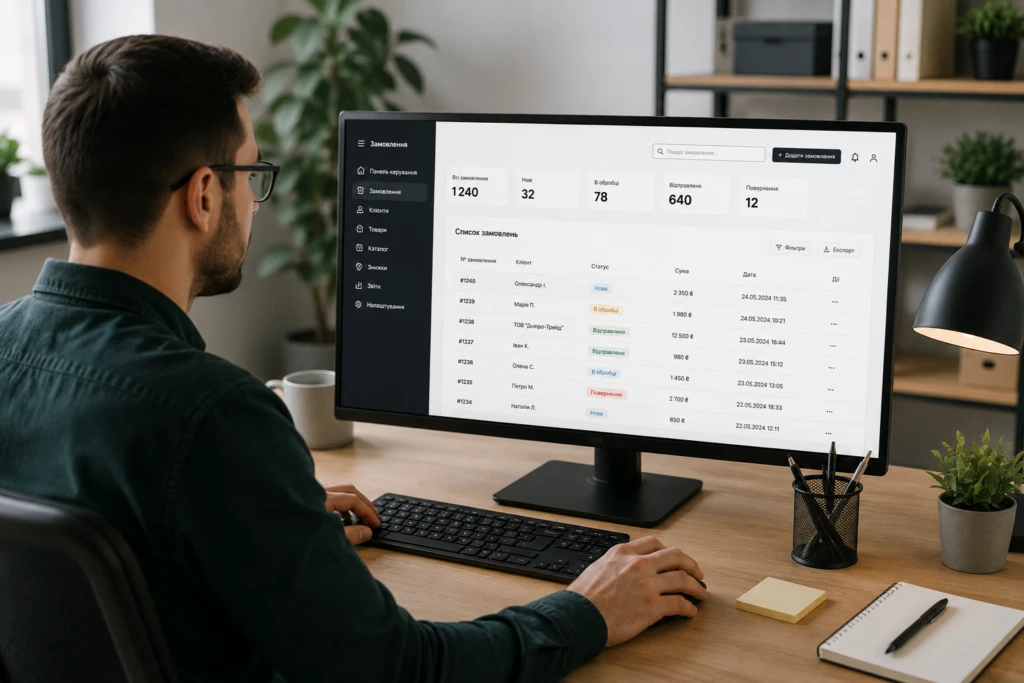
Managers, content specialists, marketers, and warehouse staff interact with the system every day. If simple tasks require multiple steps or repetitive manual work, the company gradually loses both time and money.
As operational volume grows, even small inefficiencies become significant bottlenecks, and that is usually the point where businesses invest in custom admin panels built around their own internal workflows.
The Business Is Preparing to Scale
What works for a store processing a few hundred orders per month may not be suitable for a company planning expansion into new markets.
Growing product catalogs, launching additional brands, partnering with distributors, and entering new sales channels require a flexible and scalable platform. If your current system is already operating near its limits, future growth may become difficult and expensive.
Many companies choose to invest in custom development ahead of time, before platform limitations turn into a real bottleneck.
The Platform Starts Dictating Business Decisions
This is perhaps the most important warning sign of all.
Technology should support business goals. If your company is forced to abandon new ideas simply because your CMS cannot support the required functionality or because implementation costs have become unreasonable, it is time to reassess your platform.
When the platform begins determining how the business operates instead of supporting its strategy, it is a clear indication that the company has outgrown its current solution.
Conclusion
Switching to a custom build just because it sounds more impressive is not a good enough reason. If your current CMS gets the job done and your team is comfortable using it, there is no need to change anything.
It is a different story if two or three of the situations above already sound familiar. In that case, it is worth running the numbers: how much you have spent over the past year on fixes and workarounds for your current platform, and what a custom build would actually cost once it removes those constraints.
The fastest way to find out is to talk through your specific pain points with a developer who has handled this kind of transition before, and look at real numbers instead of general promises.