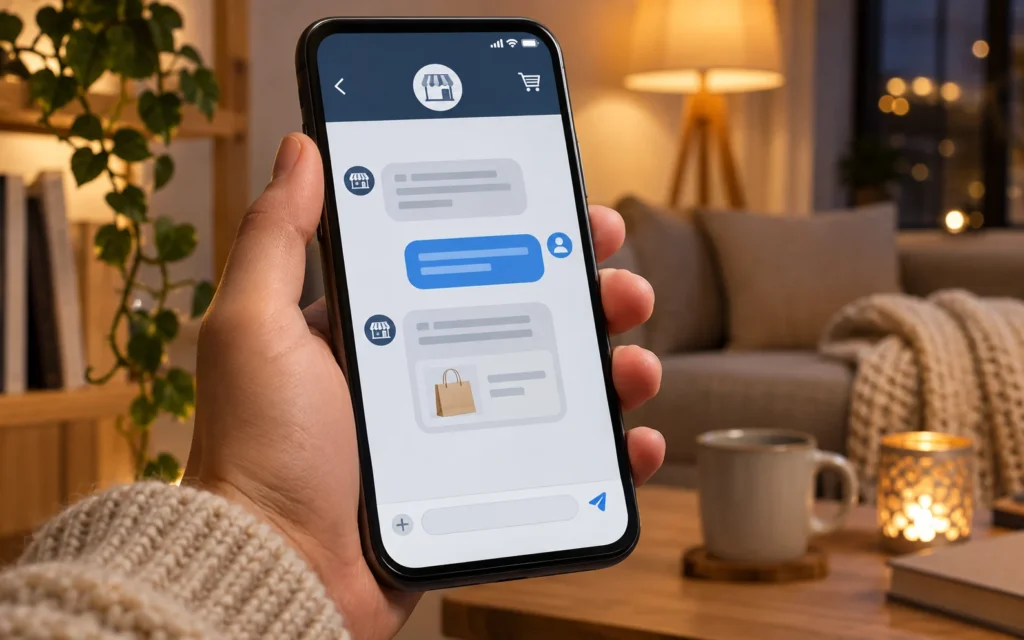
A story many companies know. The team gets a ChatGPT account, everyone is thrilled for a week, and a month later it turns out each person words requests differently and every answer starts from scratch. The model remembers nothing about your clients, your rules or yesterday’s conversation.
Which raises the question: how is an AI employee different from an ordinary chatbot, or from ChatGPT itself? The difference isn’t “intelligence”. It’s what gets built around the model.
Chatbot: a script with branches
A classic chatbot is a tree of buttons and canned answers. It works as long as the question fits the script: “where is my order”, “opening hours”. As soon as a person phrases it differently, the bot gets lost and hands them to a manager.
ChatGPT: a smart conversation partner with no context
A language model understands free text and writes well. In its plain form, though, it can’t see your orders, your stock or your contracts. Everything it knows about your company, you paste into the prompt by hand. That’s fine for a one-off task and not for daily work.
AI employee: a role, tools and memory
An employee has a defined role, instructions for it, access to the systems it needs and a memory. Those three things are what turn a model into a worker.
Tools are what it can use: look up an order, check stock, save the result in the system needed for the next step. Without tools it only advises; with them it does part of the job itself.
Memory is accumulated information, instructions and your feedback. You explain once that invoices from a certain supplier always go under a particular expense line, and next time you don’t have to. The client adds to the assistant’s knowledge and adjusts its work to their own processes.

What the first week with an assistant looks like
Nothing magical. First the role is described: what it handles, what it doesn’t, who it reports to. Then the tools it genuinely needs are connected, and nothing more. After that it’s given ten real tasks from the past to see what it does. It’s a lot like a probation period.
The first results are almost never perfect. It may misread a term that has a special meaning in your company, or pick the wrong format. That’s normal: you fix the instruction or add an example, and next time it comes out better. That’s exactly what memory is for.
Which roles are being handed over
We’ve built assistants for product testing, accounting, legal questions, customer work, marketing and design. In a store they can handle order processing and stock control.
Notice that these are narrow roles. An assistant that does one job with known inputs works more reliably than a “universal assistant for everything”. So at the start, don’t ask for an “AI director”; hire one assistant for one area.
Control and limits
Since an employee acts inside your systems, the same rules apply as for a person: who can change what, which actions it takes on its own and which only after confirmation. Cancelling an order or sending a client a letter with money terms is wiser to route through a human, at least for the first months.
It’s also worth agreeing on a log: so you can open it and see what the assistant did and on what grounds. Without that it’s hard to trust, and mistakes are impossible to investigate.
What a company risks by simply giving everyone ChatGPT
The first problem is data. Employees paste contracts, price lists and client correspondence into the chat because it’s faster. Nobody decided what’s allowed and what isn’t, and nobody knows what has already gone in.
The second is inconsistency. The same request from different people gets different answers, and the outcome depends on who words things better. An employee has one set of instructions for everyone, so the answer is the same no matter who asks.
The third is the lack of a trail. A month later you can’t reconstruct why a decision was made, because the conversation got lost in someone’s chat history.
How to tell you need one
A few signs. There’s work in the team that takes reading and understanding but not a manager’s decision. The same instruction gets explained to new people again and again. Part of a process lives in one person’s head, and their holiday becomes a problem.
If at least two of the three sound like you, it makes sense to go through the process in detail. The price depends on the complexity of the task, the amount of work and the integrations required; automation starts from $200, and we name the exact figure after the review.
Read also: What a Small Business Can Automate with AI; AI Assistant on a Website: What It Actually Does and Doesn’t Do.
Related services: Turnkey online store, Website support, Website improvements.