


A business owner opens their site on their phone, waits a few extra seconds for the page to load, and thinks: “how many customers just gave up and left?” That’s usually the exact moment a request for a technical website audit comes up — not because the design looks dated, but because something in how the project runs has started getting in the business’s way.
What Is a Technical Website Audit
A technical audit is a review of a website or web app through the eyes of a development team: how stable it is, how easy it is to use, where the technical risks are hiding, and what actually affects leads and sales. Unlike an SEO audit, which focuses mostly on search rankings, a technical audit from NextDoorCoders focuses on development quality, UX, performance, and the site’s business logic — SEO is just one additional item on the checklist.
When It Makes Sense to Order an Audit
Most often, the request for an audit comes up in a few typical situations: the site has started loading more slowly, form submissions have dropped without an obvious reason, a previous contractor has gone silent, or the business is planning a redesign or migration and wants to understand the project’s real state first. In each of these cases, an audit gives you a clear picture — what’s actually slowing the site down, and where to start.
How the Review Works
The NextDoorCoders team analyzes the project across several areas at once:
- Frontend & responsiveness — layout, mobile version, buttons, forms, visual bugs.
- UX & the user journey — how clear it is what to do on the site, and where extra steps or doubts appear.
- Speed & performance — heavy assets, images, scripts, basic Core Web Vitals risks.
- Forms & public scenarios — leads, search, filters, cart, submission confirmations.
- Security & reliability — HTTPS, security headers, exposed files, mixed content.
- Technical quality — signs of technical debt, outdated solutions, maintainability and scalability risks.
The team also looks at where AI could be useful: a chat assistant, smart search, automated lead processing, or CRM automation. A basic SEO check (title, description, headings, robots.txt, sitemap, schema) is part of the report too, but as an extra item, not the audit’s main focus.
How Long It Takes & What You Get
| Stage | Timeline |
|---|---|
| Express audit of the public part of the site | 2-3 business days |
| Extended audit with access to code and admin panel | defined after the express audit |
| Fix sprint for the issues found | depends on the scope |
The result isn’t a list of a hundred minor nitpicks — it’s a short report: 6-10 of the most important findings with priorities, a complexity estimate, and the first 5 steps to start with.
What to Do With the Audit Results
A note from the NextDoorCoders team: “An audit isn’t a reason to rebuild the site from scratch. Often, half the issues can be closed with small fixes — the audit just shows where those fixes will have the biggest impact.” After the audit, you can move straight into a short sprint — frontend, performance, forms, backend stability, or AI automation — or take the report and work through it on your own.
Leave a request on our website — send us a link to your site, and the NextDoorCoders team will run a free express audit and prepare a report within 72 hours.
Free Website Technical AI-Audit in 72 Hours
We'll find the technical issues that slow your site down, hurt stability, and cost you leads — no access to code or the admin panel required at the first stage.
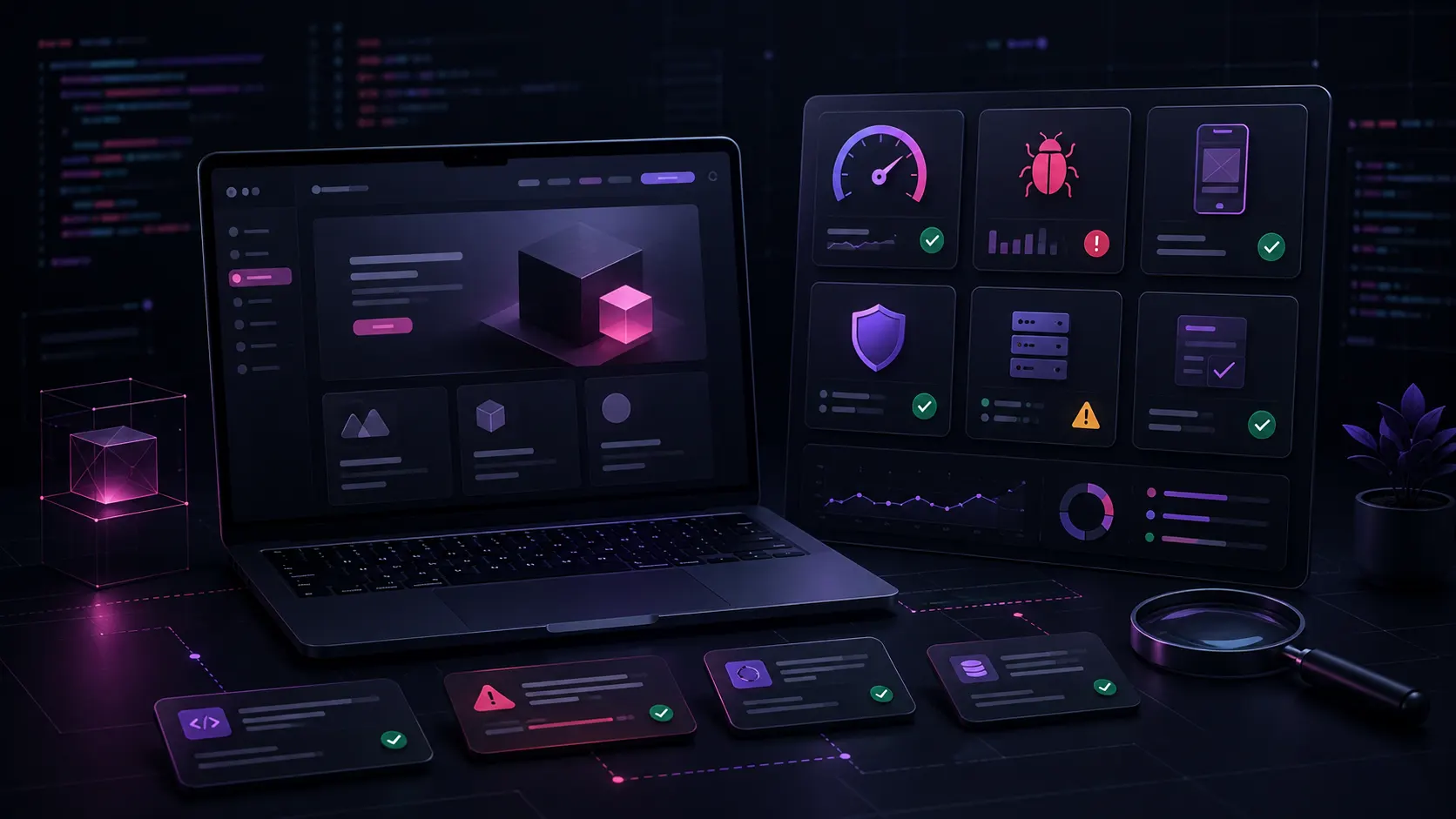
Technical Audit by NextDoorCoders — a Clear Report Without the Tech Jargon
A website can look modern and still be losing customers to slow loading times, broken forms, a clunky mobile version, unstable integrations, or technical decisions that are long overdue for an update.
NextDoorCoders runs an express audit of the public part of your website or web app, focused on development quality, UX, performance, stability, and opportunities to improve the product. We look at your project through the eyes of a development team: what’s working well, where the risks are, what can be fixed quickly, and which improvements will have the biggest impact.
Within 2-3 business days you get a simple report with priorities, concrete examples of issues, and clear recommendations.
Problems the Audit Helps You Find
Your Site Loads Slowly
Heavy images, unnecessary scripts, fonts, or layout mistakes can quietly slow things down and hurt the user experience.
Forms Aren't Generating Enough Leads
A user might fill out a form but never get a confirmation, hit an error, or simply not understand what to do next.
Mobile Looks Worse Than Desktop
On a phone you might see cropped blocks, awkward buttons, long text, or menu and element issues that are hard to tap.
UI/UX prevents users from completing the desired action
Confusing navigation, hard-to-notice buttons, overloaded screens, complicated forms, or an unclear path to submitting a request can reduce conversion even when the website is technically working.
Key Scenarios Work Unreliably
Search, filters, cart, account area, forms, or integrations may not behave the way users expect.
It's Unclear What to Fix First
Without a technical audit it’s hard to separate critical issues from minor ones — so the business ends up spending budget on the wrong things.
Who Should Order a AI-Technical Audit
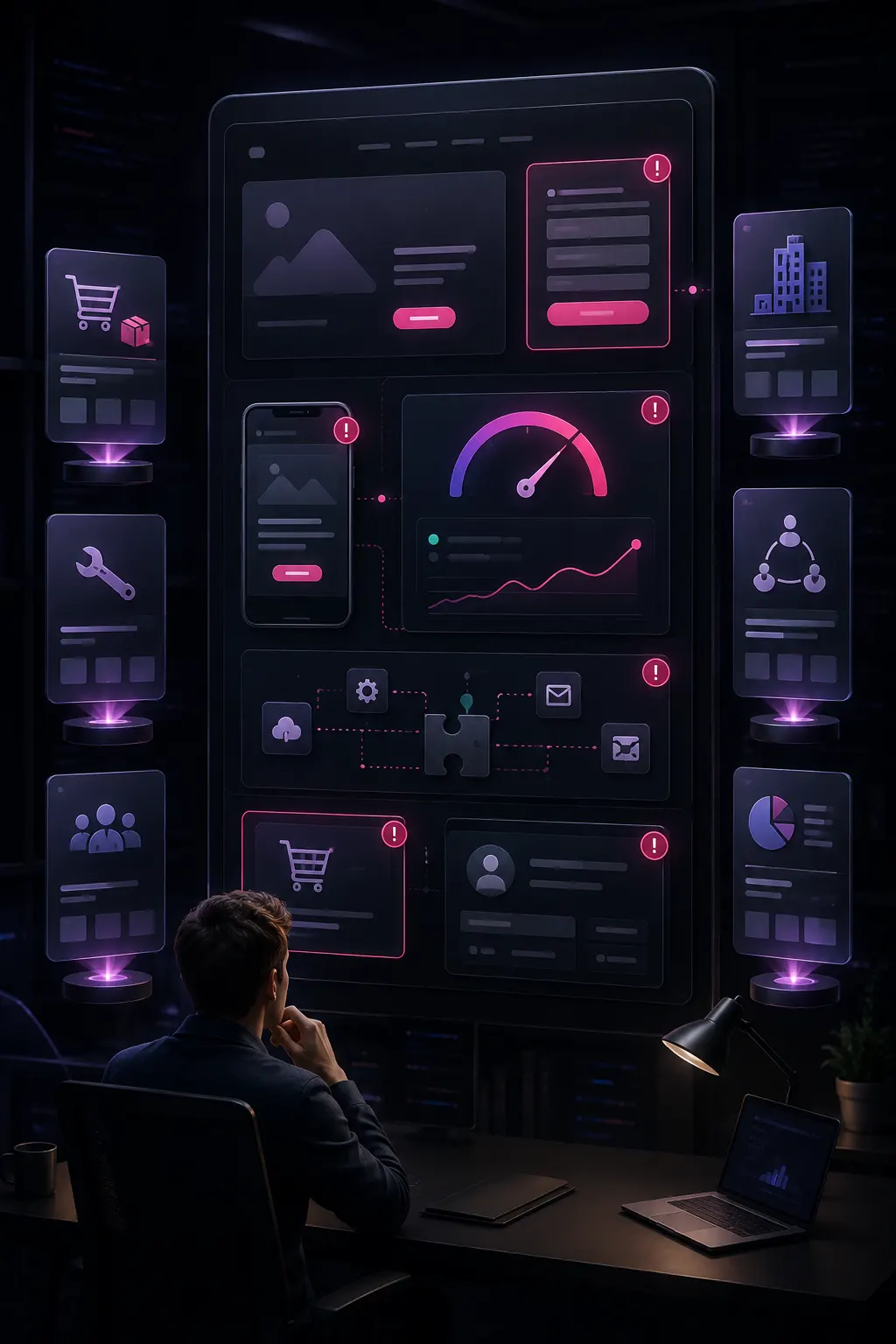
Owners usually reach out to developers once the site has already started running slowly, leads have dropped, a previous contractor has disappeared, or even a small change has turned into a complicated task.
An audit helps you quickly understand the real state of the project and make a decision: what to fix now, what can wait, and where deeper technical work is needed.
- →Businesses without an in-house development team.
- →Companies who want to understand their site's condition before further work.
- →Online stores where speed, forms, cart, filters, and order stability matter.
- →Site owners after a launch or a change of contractor.
- →Teams planning a redesign, migration, integrations, or AI features.
- →Businesses who want an independent technical opinion without a big upfront budget.
What's Included in the AI-Technical Audit
Interface and mobile usability
We check how the website looks and works across different screen sizes: buttons, menus, forms, popups, and other elements users interact with.
User path to conversion
We review whether users clearly understand what the company offers, how to submit a request or place an order, and where doubts or unnecessary steps may appear.
Speed and stability
We analyze heavy resources, images, fonts, scripts, basic Core Web Vitals risks, and the overall feeling of website speed.
Forms and key user flows
We check how requests, error messages, submission confirmations, search, filters, cart, account area, or other important flows work.
Security and technical foundation
We review HTTPS, basic security headers, service pages, exposed files, mixed content, robots.txt, sitemap, and other publicly visible technical settings.
Growth and AI opportunities
We assess what can be improved in the project: request automation, smart search, AI chat assistant, CRM integrations, recommendations, or internal AI tools.
How the Audit Works
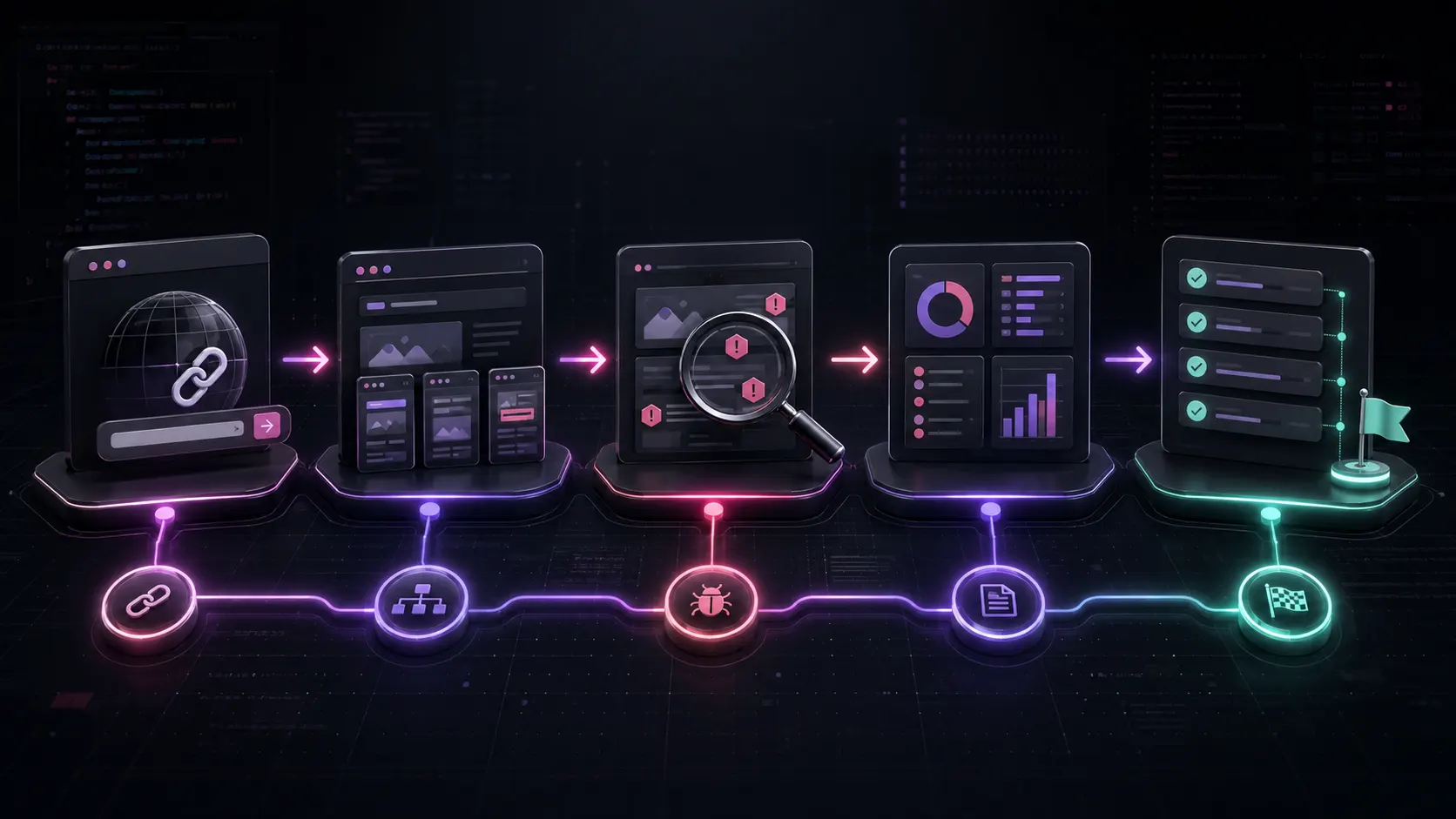
You Send Us a Link to Your Site
A URL is enough to get started. No access to code, the admin panel, or analytics is needed for the express check.
We Check Key Pages & Scenarios
We look at the homepage, forms, navigation, key sections, mobile behavior, speed, and public technical settings.
We Log Issues & Growth Opportunities
We don't list every minor detail — we pick out the findings that can actually affect leads, speed, stability, or the project's growth.
We Prepare a Clear Report
We explain every issue in plain language: what we found, why it matters, its priority, and what to do next.
We Give You the First 5 Steps
We put together a short list of tasks to start with, for the best ratio of impact to effort.
We Discuss the Results on a Call
If needed, we hold a short consultation, walk through the findings, and suggest options for further work.
What You’ll Get After the Audit
A Short Summary of the Project's State
A clear takeaway: what’s working well, where the risks are, and what needs attention.
A List of the Main Issues
6-10 of the most important findings, with their impact on the business explained.
Fix Priorities
Each task is marked as a high, medium, or low priority.
A Complexity Estimate
We show what can be fixed quickly and what needs more substantial technical work.
The First 5 Steps
A practical action plan you can start on right after the audit.
Ideas for Growth
We show where the product can be improved, processes automated, or AI solutions introduced.
Why Choose NextDoorCoders
We Look at It Like Developers
We evaluate not just how the site looks, but its technical logic, stability, maintainability, and room for growth.We Explain Things in Plain Language
The report is clear to a business owner, marketer, or project manager — no unnecessary technical jargon.We Give You a Practical Plan
We don't just find bugs — we show what's worth doing first and the impact it can have.We Can Fix What We Find Right Away
After the audit you can move straight into a short sprint of fixes.We Work With All Kinds of Projects
Websites, online stores, CRMs, account areas, B2B portals, WordPress, OpenCart, Laravel, Vue.js, and custom builds.We Don't Push a Full Rebuild
If an issue can be solved with a small fix, we'll say so. The audit exists to help you make clear-headed decisions.
Turnkey website development from NextDoorCoders — creating quality websites for your business
We have been working with NextDoorCoders since 2023, and during this time we have been convinced of the high level of service provision and professionalism of the team. During this period, we managed to work both together at the sales stage (we closed seo at the development stage, the partner – site development), and as a team on projects, marketing activities, exchange of insights/hypotheses.
Our clients are grateful for the individual approach to each project, which makes cooperation even more effective. After all, the ability to choose a solution and technology and calculate various implementation options makes NDC quite flexible.
Thank you to Volodymyr and his team for quality, responsibility and joint movement towards the result! 🚀
We would like to separately note the ability to find solutions even in complex tasks – this is what truly distinguishes NextDoorCoders from others. The team does not just complete the task, but offers optimal options to achieve the best result. We were convinced of this on joint projects.
Openness to multifaceted partnerships has also allowed us to be active in marketing: implementing joint cases, being active in the infospace, and writing joint publications on social networks.
Such comprehensive cooperation allows us to be more competitive.



We have been working with NDC since the beginning of 2021. We had a task to find developers who would improve the functionality and support our project and several self-hosted websites. It took us a while to find specialists, as we were getting rejected because we were using an outdated framework. However, NDC stepped in to help, and we quickly agreed to cooperate.
At first, we successfully implemented the accumulated pool of tasks, and later we made a number of large-scale improvements together. Of course, as in any workflow, there were some issues that needed to be agreed upon, including task and time tracking and estimating the scope of work. However, thanks to our openness to dialogue and mutual interest, we managed to establish effective cooperation.
Now the volume of tasks for revision is not very large, but all support issues are resolved promptly and professionally. I consider our cooperation to be fruitful. I can safely recommend NDC as web developers. I wish them adequate customers and interesting large projects.
Our company, All-Ukrainian Management Systems, specialises in implementing and configuring business management systems. We help companies automate processes, increase efficiency and scale their operations.
One of the most frequent requests from our clients is the creation of B2B portals that allow them to optimise interaction with partners and customers, automate orders, improve process control, and reduce costs.
In such projects, we rely on our reliable partners, NextDoorCoders (NDC). This team has deep technical knowledge and practical experience in implementing B2B platforms. NextDoorCoders: professionals in their field, responsible, result-oriented, always offering the best technological solutions and effective teamwork.
Cooperation with NextDoorCoders is a guarantee of successful implementation of B2B projects. We confidently recommend them as a partner who does not just perform tasks, but creates effective business tools that bring real results.


About 6 months ago, we needed to finalise our new rentsoft.ua website, which was handed over to us in an unfinished form by our previous contractors. We decided to find a replacement for them, as the speed of task completion and communication were important to us. On recommendation, we were offered to work with NDC. The recommendation met our expectations.
The young team is very flexible in their approach to our requirements and changes in the priority of tasks. The guys are always ready to meet us halfway and, if necessary, prioritise an important task for us.
Constant daily communication and quick turnaround time have always given us a sense of confidence that the project is being handled and that the contractor values its customers.

I’ve been looking for smart and reliable specialists to improve my website for a long time, and I was finally lucky. The challenge was that the website was not developed by professionals and had numerous issues in its code, which made everyone unwilling to review it.
I communicate with Vladimir, and the tasks are solved as quickly and efficiently as possible.
It’s a pleasure to work with such people. Thank you very much!

We have been successfully working with NextDoorCoders since August 2024. During this time, they have provided fast and high-quality support, significantly improving our website’s performance and user experience through professional recommendations and ongoing technical support.



We have been cooperating with the NextDoorCoders web studio since the beginning of 2024. During this time, the studio has established itself as a reliable technical partner who is attentive to the client’s needs. The team regularly provides professional recommendations on improving the site, performs work on SEO-technical tasks and qualitatively refines the functionality.
All tasks are performed on time, with a responsible approach and good communication. In general, we are satisfied with the cooperation and can recommend NextDoorCoders as a competent and convenient contractor.


We have a pleasant experience of cooperation with the NextDoorCoders web studio, which has been helping us with the finalization of the site’s functionality since the end of 2024. The team is always in touch, responds quickly to requests and pays attention to all details. All tasks are performed qualitatively and within the agreed deadlines. We especially appreciate the ability to delve into the specifics of the business and offer appropriate solutions. Communication is easy, open and constructive. We sincerely recommend NextDoorCoders as a reliable partner in the field of web development.
We have been working with NextDoorCoders since 2021.
We ordered the development of a CRM for production process management from them.
The team understands business needs perfectly: they implemented a convenient system for accounting for orders, controlling production, and automating many routine processes. We are constantly improving the functionality together with them.
We recommend them as a technical partner who understands the specifics of production and business processes.

We collaborated with the NextDoorCoders team on the creation of our website and were very satisfied. The work was done quickly, clearly and qualitatively. All our wishes were taken into account, and corrections were made without unnecessary delays.
The team was always in touch, suggesting solutions and helping when we did not understand something. It is very pleasant to work with people who are not only knowledgeable in technical matters, but are also truly interested in the result. Communication was easy and comfortable.
The website works stably, looks modern, and we are already receiving positive feedback from clients. There were no difficulties during the cooperation.
Thank you to the team for their approach and professionalism! We will be happy to contact them again if we have the opportunity.


On behalf of our company, we would like to express our gratitude to the NextDoorCoders team for their cooperation in the implementation of several projects, including the European startup Cooontacts. This product is designed to solve the language barrier problem in Europe – to give businesses the opportunity to find customers in their native language and, conversely, to help people quickly find those who speak their language. The task was not easy, the development environment was quite complex, but all the necessary functions were implemented within the agreed deadlines.
We especially appreciate the team’s readiness for operational improvements: despite the fact that technical and business requirements changed during the work, the guys never refused to make changes and thoroughly understood each task. In addition to the purely software part, they deeply immersed themselves in our idea, offered their own concepts and solution options, which helped to improve the product and avoid many common mistakes.
As a result, we got not just contractors, but reliable partners with whom it is pleasant to work. Thank you NextDoorCoders for your professional approach, flexibility, and responsibility — we look forward to new joint projects.

NextDoorCoders has been providing technical support for our website for a long time. Working with them is convenient: they are always available, respond quickly to requests, and do everything accurately and without unnecessary reminders. We have been working together since 2021, and during this time, we have had no complaints. The team is responsible, attentive to detail, and simply pleasant to communicate with. We recommend them!

We have been working with the NextDoorCoders team for a long time. They were implemented for our website redesign, and now they are engaged in support and implementation of new tasks. Communication is always on the level, they respond quickly, everything is discussed simply.
I like that the team does not just perform the task, but also suggests how to do it more conveniently or efficiently.
Working with them is easy and pleasant. We are happy to have found such a wonderful and responsible team.

We have experience working with the NextDoorCoders team since 2019. We have always been satisfied with the results. They migrated the site and helped with smaller tasks, making the resource look modern and convenient to use. The team always listens carefully to our wishes and offers solutions that really work.
We especially appreciate the speed of response and open communication – this creates a feeling of reliable partnership. Over the years, we have been convinced of our professionalism and appropriate approach to the matter. This is cooperation that can be recommended to others.

We turned to NextDoorCoders to create a website for our nail service courses. They did everything efficiently and on time, and also offered their own ideas that helped improve the result. Cooperation was easy and pleasant – the team was always in touch and communicated openly.
We liked that they cared not only about the completion of the tasks, but also about the overall quality of the project. As a result, we received a modern and convenient website that we were satisfied with. We can recommend NextDoorCoders as reliable partners for any web projects.


NextDoorCoders created a modern, intuitive and functional website for us, which fully meets our business requirements.
All stages of work — from concept development to successful launch into production — were carried out with a high level of professionalism.
We would like to separately note our effective approach to communication, attention to the smallest details and ability to promptly resolve any issues.
After launch, the site remains supported by a team that ensures its stable operation and further development. We confidently recommend NextDoorCoders as a reliable technological partner for the creation and support of web projects.

We, Piranil Company, started cooperation with NDC in September 2025 and have been successfully working on the tasks since then.
The team has proven itself as a reliable partner who does not just fulfill requests, but really immerses itself in business processes.
We especially appreciate that they always offer several solution options and help to choose the optimal one.
Communication is fast, clear and without unnecessary bureaucracy, which greatly simplifies the workflow. There is a sense of responsibility for the result and a desire to do more than just “according to the specifications”. We are satisfied with the cooperation.

NDC developed a corporate website for us for logistics services, and we are completely satisfied with the result of cooperation.
The team professionally performed the layout, taking into account all our wishes.
Since the start of work in 2023 and after the launch – the site has been working stably, and technical support always responds quickly to our requests.
You can feel the responsibility, deep immersion in the project and a real desire to help achieve the best result.
We definitely recommend NextDoorCoders as a reliable partner for the development and support of web projects.

Our collaboration began when the team built our website from scratch in 2019, and they’ve been maintaining it ever since. Not only are they experts in their field, but they also genuinely care about the success of our store. Working with them is easy and a pleasure!


Working with the NextDoorCoders team was a smooth and pleasant experience. They assisted us with development on the OpenCart platform, were actively involved in the project, and were always available to communicate. We appreciated their responsible approach, clear communication, and attention to detail. All issues were resolved quickly and without any unnecessary complications. Thank you for your collaboration, and we wish them continued success and exciting projects!

FAQ
No. The express audit covers the public part of the site — a link is enough. Access to the code, admin panel, or analytics may be needed later for an extended audit.
The express audit is free. If you need a deeper check with access to the code, admin panel, or backend, the cost of an extended audit is discussed separately, depending on the project’s scale.
Usually 2-3 business days from the moment you send us a link to your site. For large or complex projects we can confirm the timeline separately.
A clear report in plain language: a list of the issues found with priorities, a complexity estimate for fixing them, and the first 5 steps to start with.
Yes. After the audit, the NextDoorCoders team can take on a fix sprint: frontend, performance, forms, backend, integrations, or AI features.
 Back-End (development)


 Front-End (web implementation)


 Payment integrations




 Integration with delivery






 Analytics and pixels


 Mailing systems


 Marketplaces, Feeds, CRM, Bots, and Messaging








 Flexible integrations